Limerick City Church
Facebook Page
  • Limerick City Church
    • Who We Are
    • Where we meet
    • LCC History Page
    • Leadership >
      • The Task of Leadership
      • The Need for Leadership
      • Qualifications for Leadership
    • When we meet
    • What We Believe
    • Testimonies >
      • What is Life all About?
      • Margaret
  • Sermons
    • Sermon Series >
      • Book of Acts
      • Choose Your Church
      • The Faith of Abraham
      • Fruit of the Spirit
      • Christian's Warfare
      • The Healthy Church
      • B.H. Clendennen
      • How to Judge
      • Grace in Jonah
      • The New Wineskin
      • The Uniqueness of the Bible
      • Strange Trials
      • The Prayer Closet
      • Mighty Conversions
      • Various 2013-14 Limerick sermons
      • Sanctification of the Spirit
      • Lot's Journey to Sodom
      • Wisdom for the Wise
      • 2015 Limerick Ireland
      • Redeeming the Time
      • Mary Limerick Malcomson
      • Salvation by Faith
      • The Ministry of Christ
      • Temptation
      • 2016 Sermons Limerick
      • Genesis 1-10
      • Rebuilding the Gates Nehemiah
      • The Shadow of the Cross
      • The Blood of Jesus
      • Unity in the Church
      • My Testimony
      • A Man Under Authority
      • Authority & Submission
      • Various 2017
      • Justification by Faith
      • Born Again
      • The Church
      • The Gifts of the Spirit
      • Various 2018
      • Jerusalem and Bible Prophecy
      • How to Store up Treasures in Heaven
      • How to Hear
      • Is this the Last Generation?
      • The Divine Exchange at the Cross
      • Water Baptism
      • School of Christ Convention 2018
      • The Latter Rain Covenant
      • The Marriage Covenant
      • Lost Things
      • Genesis 24
      • The Fight of Faith
      • 2019 Sermons LCC
      • Assurance of Salvation
      • Missing Links
      • Prayer
      • The Bible
      • Psalm 119
      • Grace Gifts
      • Various 2020
      • 2020 Vision
      • Battle for the Mind
      • Blood of Everlasting Covenant
      • Christ in the Crisis
      • The Corona Crisis
      • Czech Republic Page >
        • Czech 1
      • Biblical Teaching of Head Covering
      • Christ the Healer
      • Reaching Cults for Christ >
        • Candace healing testimonies
        • New Page 1
        • New Page
        • Ladies Meeting
        • Importance of church
        • Rest in the Lord
        • New Page
        • Birthday
        • Candace May 21
        • Shona test
      • Wise & Foolish Virgins
      • God's Message in an Evil Hour
      • Biblical Love
      • The Great Reset
      • Witchcraft in the Church
      • Joseph: A Vessel of Recovery
      • LCC sermons 2021
      • The Heaven's Rule
      • The Blood of Jesus & The Last Days
      • Spiritual Warfare
      • The Centrality of Christ
      • The Battle for the Mind Vol.2
      • SOC 2021
      • Raising Children Under Rising Tyranny
      • The Four Horsemen of the Apocalypse
      • London Conference
      • The 21st Century Church
      • The Advocate & the Accuser
      • Various 2022
      • Little Things of Scripture
      • Russia, Magog & Tarshish
      • A Heart for God
      • Social Justice & the Gospel
      • A Vessel of Revival
      • Ruin, Redemption & Regeneration
      • Candace Malcomson >
        • Candace Malcomson Funeral
        • Candace Testimonies
        • Candace Malcomson Bible Studies
        • Candace Worship & Songs
        • Candace Children's Talk
        • Candace Written Articles >
          • Christian Romance Novels
          • Christliche Romane. ROMANTISCHE ROMANE
          • Worship and Contemporary Christian Music
      • Sof
      • The Four Seasons of Life
      • Providence in the Book of Ruth
      • Daily Devotions
      • The God of the Valleys
      • Penal Substitution
      • Approved Preachers
      • The Antioch Church - A Vision for LCC
      • Enemies of Marriage
      • 10th Anniversary Meetings
      • ISRAEL... What Next?
      • CHRIST: The Only Foundation
      • Various 2024
      • Various Messages 2024
      • How to be a Fruitful Christian - Tlili
      • Our Great High Priest
      • The Gain Saying of Core
      • The Importance of Water Baptism
      • Searching For A City With Foundation
      • The Effect of One Man
      • The Promises of God
      • How Good Is You're News?
      • Various 2025
      • A NEW CHAPTER
      • Koinonia
      • Winning Souls for Christ
      • Church Camp 2025
      • Papacy & Bible Prophecy
      • Wars And Rumours Of Wars
      • The Adventure Of Faith (SOC)
    • The Fiery Darts Of The Evil One
    • Latest News
    • Articles >
      • Great Commission
      • Christ the Creator
      • Repentance
      • Jesus The Preacher
      • Missionary Churches
      • Fasting
      • Unity in the Church
      • The Prayer Closet
      • GOD'S DWELLING PLACE IN EPHESUS
      • Things God Hates
      • CAN CHRISTIANS BE INDWELT BY DEMONS?
      • German
    • Books
  • Missions
    • Missionaries
    • Limerick Bible School
    • Encouraging Links
  • Blog
  • Contact LCC
    • Donate Page
    • LCC Events

SHEEP AMONG WOLVES - Part 2

8/4/2017

1 Comment

 
by C.H. Spurgeon
“Behold, I send you forth as sheep in the midst of wolves: be you therefore wise as serpents, and harmless as doves.” Matthew 10:16
These disciples had been with Him and had been taught by Him that they might teach in His name. They had for some little time been His disciples or learners and now He calls them apart from the rest, and says, “I send you forth to teach and to make disciples.” The mode of operation in the kingdom of God is, first make disciples, baptize them, teach them whatsoever the Lord has commanded and then let them go forth and do the same with others. When one light is kindled, other candles are lit from it. Do not try to teach till the Lord Jesus has first taught you. Do not pretend to instruct till you have been instructed. Sit at Christ’s feet before you speak in Christ’s name, but when once you are instructed, do not fail to become teachers. First be taught, but afterwards fail not to teach.

Hoard not up the treasure of divine knowledge, for there is no shortage therein—eat not alone the honey of redeeming love, for there is enough and to spare. Feed not upon the bread of heaven with selfish greed, as though there were a famine in the land and you had need to save each crumb for yourself, but break your bread among the hungry crowd about you and it shall multiply in your hands. Christ has called you that you may afterwards go forth and call others to His sacred feast of grace

“I send you forth as sheep in the midst of wolves.” That is to say, the task is one of great danger and difficulty. Our divine enterprise is no child’s play. You are to go forth as sheep among wolves, that is to say, you have to go among those who will not in any way sympathize with your efforts. Sometimes we go among amiable, quiet, almost-persuaded people, and it is somewhat pleasant work, though even there it is very discouraging, for those who are not far from the kingdom are often the hardest to be won.

The bleating sheep finds no harmony in the bark or howl of the wolf. The two are very different animals and by no means agree. You do not suppose that you are going to be received with open arms by everybody, do you? And if you become a preacher of the gospel you do not imagine that you are going to please people, do you? The time may come when perhaps the wolves will find it most for their own comfort not to howl quite so loudly, but my own experience goes to show that they howl pretty loudly when you first come among them, and they keep up the hideous concert year after year until at last they somewhat weary of their useless noise.

The world does rave as a wolf if any man is in double earnest for the kingdom of Christ. Well, you must bear with it. What sort of sympathy can a lamb expect from wolves? If he expected any, would he be not disappointed? Be not disappointed, for you know your surroundings and you know your mission. When our Saviour used similar words to the seventy, He did not call them sheep, but lambs (see Luke 10:3), for they were not so far advanced as the twelve, yet did He send them into the same trying circumstances and they returned in peace. Even the weak ones among us should therefore be of good courage and be ready to face opposition and ridicule.
​Pt.3, Continued next week ...
1 Comment

SHEEP AMONG WOLVES - Part 1  

1/4/2017

0 Comments

 
by C.H. Spurgeon
Picture
"Behold, I send you forth as sheep in the midst of wolves: be you therefore wise as serpents, and harmless as doves.” Matthew 10:16
WELL may the text begin with a, “Behold,” for it contains some special wonders such as can be seen nowhere else. First, here is a tender and loving Shepherd sending His sheep into the most dangerous position—“I send you forth as sheep in the midst of wolves.” It is the part of a shepherd to protect his sheep from the wolves, not to send them into the very midst of those ravenous beasts, and yet here is the Good Shepherd, “that Great Shepherd of the sheep,” actually undertaking and carrying out this extraordinary experiment of conducting His sheep into the very midst of wolves. How strange it seems to poor carnal sense. Be astonished, but be not unbelieving—stand still awhile and study the reason.

The next remarkable thing is, “sheep in the midst of wolves,” because according to the order of nature, such a thing is never seen, but on the other hand, it has been reckoned a great calamity that in some lands wolves are too often seen in the midst of sheep. The wolf leaps into the midst of a flock and rends and tears on every side. It matters not how many the sheep may be, for one wolf is more than a match for a thousand sheep. But lo! here you see sheep sent forth among the wolves, as if they were the attacking party and were bent upon putting down their terrible enemies. It is a novel sight, such as nature can never show, but grace is full of marvels.


Equally extraordinary is the singular mixture, never yet seen by human eye amongst beasts and birds—a mixture of the serpent with the dove in one person. What a strange blending. Creatures which are capable of cross-breeding must have some sort of kinship, but here is a reptile of the dust united with a bird of the air, “Be you therefore wise as serpents, and harmless as doves.” Grace knows how to pick the good out of the evil, the jewel out of the oyster shell, the diamond from the dunghill, the wisdom from the serpent, and by a divine chemistry it leaves the good which it takes out of the foul place as good as though it had never been there. Grace knows how to blend the most gentle with the most subtle, to take away from prudence the base element which makes it into cunning and by mingling innocence with it, produce a sacred prudence most valuable for all walks of life.
​
With these three wonders lying upon the very surface of the text, we shall enter into a fuller consideration of it with great expectations, but if we do so, we shall be disappointed if we expect to learn anything very extraordinary unless we are prepared to practice what we learn. I may truly say of this text, he that does its bidding shall understand its doctrine. He who follows its precept shall best know its meaning. May the Spirit of all grace work in us according to His divine power and perfect in us the will of the Lord.
​Pt.2, Continued next week ...
0 Comments

Unity in the Church—Part 1.

6/8/2016

1 Comment

 
I John 5:7-8, “For there are three that bear record in heaven, the Father, the Word, and the Holy Ghost: and these three are one. And there are three that bear witness in earth, the Spirit, and the water, and the blood: and these three agree in one.”

Just as the Father, the Son (the Word) and the Holy Ghost bear witness together in Heaven so also upon the earth three agree in the same beautiful unified manner: the Spirit, the water (the Word) and the Blood. This reveals that these are the three essential unifying elements in the church on the earth that agree together in the cause of unity in the church.

Unity through the Blood


Only through the Blood of Jesus Christ are we reconciled to God and are thereby unified together as His people. There is no peace, unity or agreement amongst men unless they have come through the blood-sprinkled way of redemption. Only those who through repentance and faith have lost all hope in religion, man and self can be unified. Only those who turn to and trust wholly in the Blood alone for their forgiveness, justification, redemption and sanctification can be made one. Only by blood can we enter into the covenant of grace and be made one in that covenant. Only the blood can deal with all enmity in our hearts and unite us with a holy God. So also only a blood-bought and blood-washed people can be united. The greatest divide in human history was between Jew and Gentile yet through the Blood of the Cross, Jew and Gentile were forged into one new man called the Body of Christ. We are not united by being nice to each other. We are not united by avoiding disagreements. We are only united because the Blood has dealt with our sin.

One of the most precious verses in the Bible about unity is Psalm 133:1, “Behold, how good and how pleasant it is for brethren to dwell together in unity!” Notice that it says “brethren.” Only spiritual brothers are united spiritually and only unity amongst brethren is blessed of God. Any unity between those birthed of God and those who are strangers to the new-birth is not a unity blessed of God. In the New Testament the term “brethren” means those birthed from the same womb. Christ in His ministry rejected all religion, good works, customs and religious tradition but pointed to the new birth, the born-again experience, a supernatural birth from above as the only means to bring sinners into the same family making them brothers. Only brethren are called to unity.
​ To be continued ...
1 Comment

Real Revival Reports!

11/6/2016

0 Comments

 
Once the Salvation Army was established in the city of Paris in the 1880s, officers were sent out to surrounding towns and villages to spread the Gospel. Reports like the following came in: A telegram from Beaucourt came on Christmas day: “Revival here, send help, twenty-five souls saved. Great liberty in night of prayer which terminated at 4 a.m.”

“Forty soldiers are the result of our meetings, I have never seen anything like the night of prayer: snuff-boxes, pipes, tobacco, and drink, all yielded to the Lord. My own soul is mounting; every day I enjoy intimate communion with my Saviour. Nine saved in one meeting, six young men volunteered. How little light they have! I have been crushed lately with the thought that they would not remain faithful. I pleaded with God for them, then He said to me, ‘Do not fear; I am almighty to keep.’ What a responsibility I have! I need my Lord’s continual help and power.”


“On visiting a convert one day in an inn where many men were drinking in the saloon, I asked if they would let me pray. ‘Yes,’ was the reply. After prayer and a few minutes’ talk, I saw a crowd coming towards the inn; one of the men who had listened to me had gone out and gathered these people, saying, ‘I know you are not proud; you love everybody, the poor and the rich. That is why I brought all these people to you.’ And what a meeting we had!”

One convert wrote to the Maréchale: “I was born a Catholic, but married a Protestant, for which I was excommunicated. After my marriage I returned several times to the chapel, seeking pardon for my sins; but the priest repulsed me as a completely lost soul…there was no more salvation for me! One evening I went to an Army meeting, where, glory to God! I learnt that  although I was refused by the ‘Church’, and a poor sinner, Jesus did not wish my damnation but my salvation; and, bless His name! I gave myself completely to Him, and now I am happier than I have ever been. On Sunday morning my husband gave himself also to the Saviour; instead of being an ‘excommunicated Catholic’ and my husband a ‘Protestant’ we are both ‘soldiers of Jesus Christ,’ and are saved by His precious blood.”

0 Comments

The Triumph of Love or German Boots

21/5/2016

0 Comments

 
Picture
One day a Frenchman, Franḉois, refused to clean the boots of another Salvation Army cadet, who was German.

“I clean a German’s boots? Never! Never!”

The Maréchale quietly said: “The boots will be cleaned.”

“Never by me!”

“By you.”

“Well, not now, let them wait!”

The whole day passed, and the boots were not cleaned. The Maréchale knew what Franḉois suffered inwardly, and got him alone in the evening.

“Franḉois, Jesus died for the Germans,” she said.

His lips remained tightly pressed. He suffered, and she suffered with him. After a moment’s silence he burst into a torrent.

“We have endured too much! Think of the siege of Paris. That beast of a Bismarck! Oh! Our country has suffered. Clean a German’s boots? Never!”

He raved. The Maréchale was quiet and listened for a time. Then she said:

“All that may be true; but you are going to have a greater victory over the Germans than ever the Germans won over you. The triumph which they had over France was a flea-bite in comparison.”

She got his ear, and talked to him of the highest things. The victory which Jesus won on Calvary over Pilate and the Priests and Judas, this must be Franḉois’ victory.

“Go back to your trade unless you can win this victory. This makes a disciple of Franḉois, and nothing else. These boots are only a detail, but they have brought to light something in you that is hindering the great victory.”

And so they talked. She would not force him. Next morning she gave a lecture, at the end of which he came into her room and sat down. There was a moment’s silence, and then he collapsed, falling all of a heap and sobbing like a child.


“Maréchale,” he said, “I will clean the boots!”

Such training and conquest over self, makes a soldier of Christ ready for any conflict from the outside.

—Excerpt from The Maréchale by J. Strahan
0 Comments

A Princess Missionary

7/5/2016

0 Comments

 
Picture
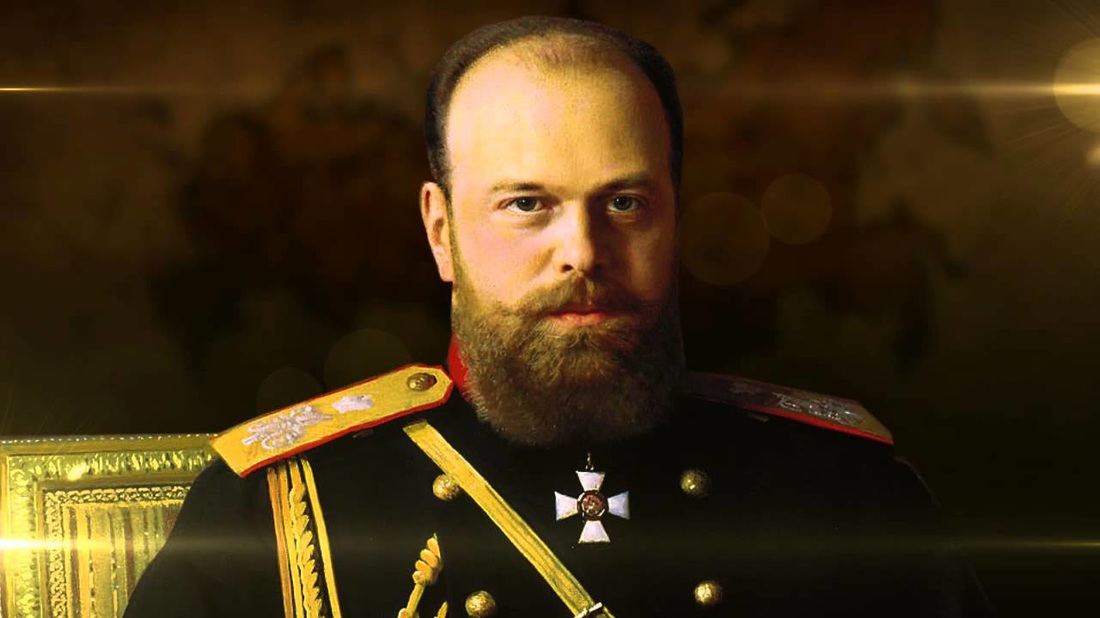
Czar Alexander III of Russia
Among those who came to see and hear the Maréchale’s evangelistic campaigns, was a little Russian lady with deep and thoughtful hazel eyes. She was the celebrated Princess Nancy (Anastasia) Malzoff of the Russian court. One of the Czarinas died in her arms. She was a friend of King Edward VII, and her brilliant wit made her a welcome figure in every court of Europe. She spoke eight languages.
 
When she was well advanced in life, and thought she had known everybody worth knowing and seen everything worth seeing in the world, she met the Maréchale. From the moment the Maréchale opened her lips, she was fascinated, first by the speaker, and then still more by the message. Next morning she came in her carriage to the Vilette. The Maréchale was scarcely well enough to receive her, but she would not take a “No.” When she entered the Maréchale’s room, she threw herself by the bedside and exclaimed, “Oh! Tell me, how did you get to know Him?”

This was the commencement of a seven years’ friendship, and during all that time she was never out of reach without writing the Maréchale every second day.
 
The Princess was raised as a member of the Orthodox Greek Church. Her mother had married her off at sixteen, and she had eleven children by the time she was twenty-eight. When she found that her husband had become unfaithful, she dismissed him with an emphatic “It is over!” and for more than a quarter of a century she had never seen him. The Maréchale listened with deep sympathy to the story of her life, and then said, “You must forgive him, if you would be forgiven”

“Never, never!”

“Yes, if you want Christ, forgive him. Never mind what he has done, you must forgive him.” But the Princess could not. A struggle went on in her mind for six weeks. She began to come to the meetings at the Rue Auber, but she had no peace. the Maréchale opened the question again.

“Come now, I want you to write and invite him to meet you at your hotel, to dine with him, and to forgive him.”

A terrible inner controversy ensued, and the Princess became ill over it. One can scarcely imagine what it all meant to her, and yet thousands have to go through the same.
 
Calling one day, the Maréchale found her in a cloud of cigarette smoke.

 “Princess, how dare you smoke like this?”

“Well, I am surrounded by a thousand devils, blue, black and yellow. You have been neglecting me.” 
 
A ceaseless conflict was raging in her breast, and ’ere they parted that day she wrote a letter and said she would send it.

The Maréchale called again, and found that the letter had not been sent. Then the crisis came.
 
“Princess, you are lost. If you do not forgive, your heavenly Father will not forgive you.”
 
“I cannot, I cannot.” She was in agony of soul. 

“Princess,” said the Maréchale , “are you perfect? From the little I know of you I should think you have a very bad temper.” “It is true, it is true.”
 
“Your sins have not been his, but they are sins before God, and have caused suffering to others. If you want God to forgive your bad temper, you must forgive him.” 

The Maréchale prayed, and bade her look to the Cross and see how Christ forgave. Then she told her again what to do.

“Darling Princess, you are to invite him to your apartments; you are to have a sweet little dinner for him and flowers on the table, and when he comes you are to kiss him.”

“But I cannot!”

 “Yes, you will. Forgive him, and I know peace will come.” 

“Very well, I will, I will!”
 
The Maréchale chanced to be leaving Paris for a time, and said, “You will send me a wire when you have done it.” The Princess invited her husband. He made a long night journey. She kissed him and forgave him. Next day the Maréchale received a wire which made her dance for joy. It ran: “All is done as you said, and the peace of Christ floods my soul.”
The Princess’ husband died after a few months, and her thankfulness for what she had done was profound. 

 
The last years of her own life were beautiful. In a letter which she wrote to General Booth in regard to her friend’s health she said: “I owe a great deal to the Maréchale . She has given me a treasure greater than all the treasures of this world—she has given me a living Christ; she has put Him not near me, but in me, in my soul, and the gratitude I feel for that blessing is great.” An article from her pen on the Army’s work in Paris contains these words: “The Auber Hall is to me a holy place. I feel the presence of Christ there—Christ who has personally become a living Saviour to me since the Maréchale  brought me to Him and committed me to His Divine arms.” Hundreds of letters from the Princess to the Maréchale prove that the heart which truly loves never grows old. In them, the Princess speaks of her love for the Maréchale because she persevered to reveal her old, rotten self to herself and brought in its place, an eternal love. Review how very straight and unlovely were the Maréchale’s dealings with the Princess—ever more daring for she addressed royalty—yet she found in the Princess a friend and a vessel for Christ whose witness was to reach the Emperor of Russia. One of her letters reads as follows:
 
“I will see the Emperor in these days, and I will seek the strength to speak to him. You see, speaking is not enough, one must in such a case pour out one’s soul and feel that a superior force guides one and speaks for one.” It turned out just as she had hoped. One night she was at the Palace St. Petersburg. After dinner the Czar Alexander III came and seated himself beside her. Soon they were in intimate conversation. She began telling him what her new-found friend in Paris had done for her. She talked wisely as he listened attentively.
 
“But Nancy, you have always been good, always right,” said the Czar. “No,” she answered; “till now I have never known Christ. She has made Him real to me, brought Him near to me, and He has become what He never was before—my personal Friend.” What a mercy of God to allow the full Gospel of Christ to come to the Romanov family in the very generation in which they would be cruelly killed. Czar Nicholas Romanov, Czar Alexander’s son and his family, were assassinated in 1917.

 —Excerpt from The Maréchale by J. Strahan
0 Comments

A Tolstoy Philosopher Finds Reality

9/4/2016

0 Comments

 
Picture
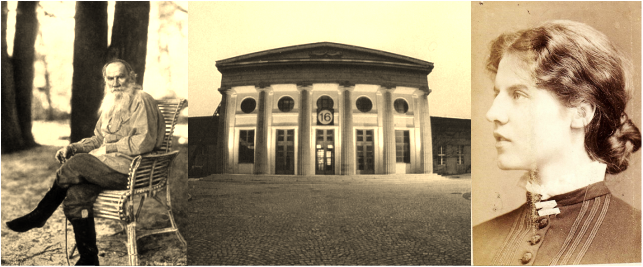
The wife of a wealthy Dutch, University Professor begged the Maréchale to talk to him and persuade him out of his decision to resign work, sell his beautiful villa, to become a ‘peasant’ digging potatoes—by choice. All of which came about because he believed in Tolstoy’s philosophy that peasants had no worries and had peace in this life because of their very few possessions and simple way of life. 

The Professor had heard a very wonderful and powerful message spoken by the Maréchale on the futility of life without Christ and had been deeply moved by it. On that same night, the Maréchale approached the Professor.

“Professor I have come to have a little talk with you”

That was just what he too desired.

“I am a Tolstoyist,” he said, and at once began to tell her of his theories. “We must work out our own salvation. All men are naturally equal, no one superior, no one inferior to another, and all should live the simple life, the life of nature!”

“Professor,” said the Maréchale, “this kind of talk is a reflection on God who made us. We are not all made with the same faces, nor with the same gifts. My mother could not wash clothes; if she tried it she would faint away. Why should we all attempt to do the same work?”

He flung away his cigar and exclaimed, “Look at those people round about here! I don’t want my children to grow up and just be like them. They do nothing but live for themselves. They all go the general round with everybody else.”

“What are you going to do, Professor?”

“I have taken a farm, where a hundred of us are going to live the life of peasants, wearing blouses and tilling the soil.”

“You won’t be there four-and-twenty hours before you will have quarrels and disputes. I have had some experience in dealing with humanity, and with all the gifts and graces of the Spirit it is difficult to keep people in love and harmony. Without that it will be a great failure.”

Then he broke out again. The only thing to put the world right was human effort, mechanical labour, the simple life according to nature... and so he ran on and on, eloquently expounding his theories. It was now about one o’clock in the morning when the Maréchale said, “Listen to me. One thing strikes me. You have never said a word all this time about sin. That is the great fact which confronts us in every nation, community, family, and you have never mentioned it—sin!”

“Oh,” he said, “we don’t say sin, we say sickness.”

“I am not going to quarrel with you about terms. Express the thing as you will, there is the great fact. You shelve it, but you have to face it. There is the great obstacle to all improvement—this fact of sin. Selfishness, call it what you please. Professor, what would you say to a murderer? This man is very sick indeed? Yes, and where is the doctor?”

The Professor looked in to the fire with his dreamy blue eyes, and made no answer. She touched his arm and said, “Here’s a drunkard. He has tried a hundred times to give up drink and failed. Professor, I bring him to you. What have you to say to him?”

“I will tell your drunkard that he is to exercise his will.”

“Is that all? Nothing more? You would insult my poor drunkard, telling him to exercise his will. He has no will to exercise!”

The Professor again dropped his head, looked in to the fire, and was silent.

“Do you not see,” she continued, “the will is broken—fallen with the rest of us? It is powerless, as tens of thousands would cry out. There is where we need a Saviour—a Divine hand that will take hold of our poor human need and lift us up—some One who will come into our hearts and bring new aspirations, new desires.”

It was about two o’clock when the Professor turned to her and said, “I throw up the sponge!” and the Tolstoyan, groping after the truth and sincerely eager to find it, added, “Pray for me, Maréchale. Live for us, give us the faith that will change us all.”

He asked her to speak in the great Volkspalast of Amsterdam, which holds four thousand people. She consented, and asked him, “What shall I say?”

“Say to them what you have said to me. Just tell them the same thing.”

Some time afterwards, when she was in Amsterdam, he went to observe the work that the she was doing with some of the best and some of the worst types of human nature. He was deeply moved while she talked to young girls who had fallen into evil ways.  And he acknowledged that while sin—self-love—mocks our ideals and prevents them from being realised; while sin keeps us moving in an endless circle like a dog running after its tail; while we can no more save ourselves from sin than we can escape from our own shadow, the love of Another introduces us into a new world, gives us a new nature, and makes all things possible, even growth into the likeness of Christ, who not only breaks the power of sin, but makes us partakers of His holiness.

The Professor learnt that the simple life of obedience to Christ is for all men and nations, the divine way of victory and progress. The idealist had found his true Ideal. This same Professor is now with Him, seeing Him face to face, changed into His image…   
—Excerpt from The Maréchale by J. Strahan
0 Comments

A 19th Century ‘Facebook’

2/4/2016

0 Comments

 
Picture
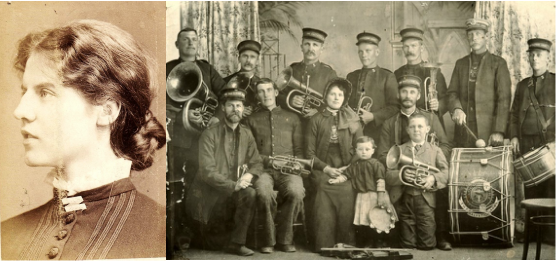
Excerpt from, The Maréchale (Katie Booth Clibborn) by James Strahan
 
One day a French Baron, who had received a great blessing at the Maréchale’s Conferences, said to her, “What you lack here is pictures; for instance, the saints. Those beautiful faces, with their sweet celestial expressions, diffuse a sentiment of reverence and quietness, and they would form such a beautiful background to you. You should have the Virgin, and Saint Francis, and many others. That is what you lack in all your halls: could we not do something?”

“Baron,” said the Maréchale, “will you come here next Sunday evening?”

“Yes, certainly.  Are you going to speak?” He never lost a chance of hearing her.

“Yes; be sure you do not miss it.”

 
On Sunday evening the Maréchale marshalled her little group of officers in to the Hall. She filed them in, men on one side, women on the other. She stood in the midst of them, and spoke. At the end of the meeting the Baron came forward. “Maréchale,” he said, “you have no need of pictures. Those figures! Those faces! They are your pictures.”
 
Her friend, Frank Crossley, was greatly struck by this incident. He wrote: “I was specially interested in the remark upon inspired faces. I once heard Rendel Harris, a great Bible scholar and collector of Biblical scripts, say  that Bible critics might tear the volume [written work] into shreds, but they could never rub off the light of God from the faces of His people.”
 
The Maréchale once wrote, “We are sometimes told that our uniforms, our young women speaking in public, our tambourines and our processions bring contempt upon religion. It is a mistake. That which is the laughing-stock of the world and of Hell is a religion without sacrifice. People will never believe in Christians who, while professing to be disciples of Him who had not where to lay His head, live in luxury, seek first the comfort of their family, the health and position of their children, and let their souls perish for lack of that Gospel which they profess to believe. There is the secret of the unbelief of France; that is what makes the young who are in search of truth cry, ‘Comedy!’ On the other hand, those faces which radiate the light from on high, those young people who rise up to give themselves to God instead of the world, those men and women who declare, with a sincerity which leaves no room for doubt, that they consecrate their life to God for the saving of souls, are more eloquent than the most beautiful discourses.” 


A well-known socialist of the time, who greatly admired the Maréchale, wrote of the Salvation Army, “I confess that I find it remarkable that among these young girls, pretty as well as plain, is the complete absence of the ordinary feminine expression. . . In looking with searching, scrutinizing eye at the faces enveloped in this ugly bonnet, we have not deciphered the least vestige of this expression, neither timidity, nor awkwardness, nor restlessness, nor the consciousness that people are thinking of them. Nothing. These faces are the free faces of free creatures.”

0 Comments

A Priest is Converted in France

26/3/2016

0 Comments

 
Picture
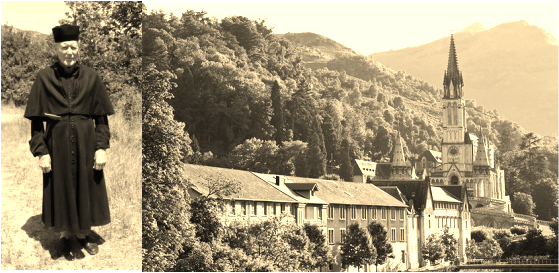
On a lovely September evening the Maréchale was walking towards the sea, lost in admiration of the sunset. Fatigued with her Sunday morning’s work, she was seeking a little repose. She observed a priest slowly proceeding towards the hill on which stood a little Catholic church. His appearance struck her; he looked at once so distinguished and so sad. An inner voice said to her, “Speak to that priest.” “I cannot,” she said, “he would think me mad.” But the voice said the same words a second time, and then she instantly obeyed. Hurrying towards the priest, she said, “Good evening, mon père. I presume you are going to the church on the hill. May I accompany you, for I would speak with you on spiritual subjects?”
Uncovering his head, and bowing with great respect, he answered, “Certainly, madame.” They walked on for a little in silence. Then she said, “What must I do to be saved, mon père?”
“Keep the ten commandments,” he answered at once.

“But the rich young man who came to Jesus could say with his hand on his heart that he had kept them all, and yet had no assurance of salvation. He was in great trouble. He said, ‘What must I do to be saved?’”

“Oh, then you must take the holy Eucharist very often.”

“But those who take it are they saved from sinning? Are they not the victims of the power of evil, the same as others?”

“Oh! Yes, madame, but then there is the Confessional.”

“But does not the same thing apply to the Confessional,
mon père? You must know that there are tens of thousands in France who confess, but fall again the next day. They have not found rest. Is not Christ ready to save us if we are ready to be saved?”

“Alas! Madame, we shall sin always, always, to the very end of our lives.”

“But, my father, were not St. Augustine, St. Francis of Assisi, St. Catherine of Siena, and many others, delivered from the slavery of sin and self? They attained to something definite—to holiness.”

He turned with vehemence and said, raising his voice, “Ah! Madame, but those were extraordinary lives. Those people were saints.”


“No, my father, they were men and women like you and me. What God did for St. Augustine and St. Catherine of Siena, can He not do it for me if I am ready to fulfil the conditions which He lays down? What does religion do, what is it worth, if it cannot deliver us from sin?” He did not answer. He was silently thinking.

She went on, “Is Christ a Saviour, yes or no?”

“Oh, yes, yes, He is!”

“Has He saved you, mon père?” They stood still for a moment and he turned his face away, with a look of poignant sadness. Then followed a confession—one of the deepest, most heartfelt cries she had ever listened to—ending with the words, “Alas, alas! All the days of my life I sin, and I expect to sin to my latest breath.”

The Maréchale  was profoundly moved, and felt that she stood upon holy ground. At last she spoke, “Then Calvary is the greatest fiasco the world has ever seen.”

Stretching out his hand, he said, “Oh, madame, do not say that; it is blasphemy.”

“But, my father, we are in the presence of facts, not fancies. You have left what men prize most. You have lived up to your light. And what do I find? Torment instead of rest, conflict instead of assurance, bondage instead of deliverance. Surely my father, Jesus did not come to increase our burdens, but to relieve them. You remember His word, ‘Come unto me and I will give you rest.’ He said, ‘My yoke is easy and my burden is light.’ Are these theories to be preached in pulpits, or are they realities?” By this time they stood on the summit of the hill, and she asked, “You are going to preach tonight?”

“Yes.”

“Would you like that we should go down the hill together and resume our conversation?”

“It would be a great pleasure, madame.”

He preached one of the best sermons she had ever heard, partly inspired, she could not help thinking by their intimate talk.

As the congregation moved out, she stepped into a Confessional box to wait for him. She saw him turning this way and that with a look of disappointment, and stepping out, said to him, “I am here, mon père.”

They began to descend the hill together. “I greatly enjoyed your sermon. But how can you show others the way of deliverance if you have not found it yourself? How can you unbind if you are not unbound? How can you heal if you are not healed? How, my father? Do you not see that all this is only from the head, not from life, the heart?”

“It is true! But I try, oh my God, I try!”

“But it does not come in that way—by our struggles.”

“Then how?” he exclaimed in a tone of despair.

“Does He not say, ‘Abide in me, and ask what you will, and it shall be done unto you’? Does not St. Paul testify, ‘I can do all things through Christ which strengtheneth me.’ How many have given praise to Him who is ‘able to save to the uttermost’ and ‘able to present us faultless’! Put Him to the proof. If anyone has the right to salvation, surely you have.”

They paused under a tree in the stillness of evening, and, while he stood with bowed head, she knelt beside him and prayed.

—Excerpt from The Maréchale by J. Strahan
0 Comments

EVANGELISM TESTIMONY

19/3/2016

1 Comment

 
Picture
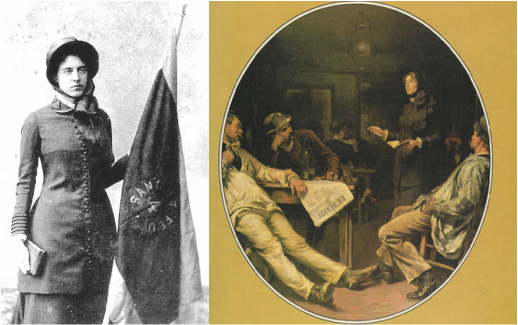
One Winter’s Night in Paris 

One winter’s night in Paris in the 1880s, Catherine (Katie) Booth-Clibborn (18 September 1858 – 9 May 1955) and her two young co-workers, Blanche Young and Kate Patrick (an Irish lass), went out with shawls on their heads, and made their way to one of the boulevard cafés. Katie passed the door, and passed it again. She turned to her two friends and said, “You have never known [me] till now; you see what a coward [I am]”. “No, no, no!” protested both her companions.

 
THIS said by the very same young woman who was now a woman of great renown in the press and to the public, because she had been freed from prison by the strength of the defence which she herself presented to the judge. Her time in prison was in Switzerland and the charge against her was for preaching the Gospel in a public gathering. She had endured a testing time separated from friends and family, but had endured and had a great victory indeed. Yet now, this brave and battle scarred heroine was admitting to her fear.

At last she put her hand to the door of the café, pushed it open, and went in. A man in a white apron was selling drink. Going up to him she said, “May I sing something?” The man stared open-mouthed. Trembling from head to foot, she repeated, “I should like to sing something.” “Very well!” replied the man, and she began:

“Le ciel est ma belle patrie,( Heaven is my beautiful homeland)
Les Anges y font leur sejour; (The Angels will make their stay)
Le soldat qui lutte et qui prie. (The soldier who struggle and prays)
Y sera bientot a son tour (will soon be there)”

While Katie sang, Blanche chimed in with her guitar and her second voice. As they proceeded, the smoking, drinking, and card-playing ceased, and every face was turned towards them. They sang on. When they had finished the hymn, Katie thanked her audience adding that they could hear her again at Rue Auber Hall; and that she knew a Friend of whom she wished to tell them. As she and her comrades turned to walk out, the man in the white apron bowed as if they had done him a service. “May I come another time?” she asked, to which he replied, “Certainly, Mademoiselle!”

That night they visited 16 cafés and when she got home she felt as if she had never been happier in her life; never nearer to Jesus. She had tried in her own way to obey His command, “Let your light shine before men.”  From that time, thousands and thousands of cafés were visited and much good was thus done.

—Excerpt from The Marechale by Strahan
1 Comment
<<Previous
Forward>>

    Limerick City Church

    We are a church that has a real burden for the city of Limerick. We are praying that many will experience true salvation in Christ and that the Lord will pour out His Holy Spirit in a genuine revival.

    Categories

    All
    B.h. Clendennen
    Faith
    Hymn
    Men Of Faith
    Shiloh
    The Church

    RSS Feed

    Archives

    April 2022
    August 2020
    May 2018
    April 2018
    November 2017
    May 2017
    April 2017
    August 2016
    June 2016
    May 2016
    April 2016
    March 2016
    February 2016
    January 2016
    August 2015
    June 2015
    April 2015
    March 2015
    February 2015
    January 2015
    December 2014
    November 2014
    September 2014
    August 2014
    July 2014
    June 2014
    May 2014
    April 2014
    March 2014
    February 2014
    January 2014
    December 2013
    November 2013
    October 2013
    September 2013